There was a time when the greatest threat to the mechanical watch was supposed to be the smartphone. Then came the Apple Watch, Garmin, Whoop and an ever growing collection of connected devices competing for space on our wrists.
The assumption was simple. If technology could do everything a watch could do, and a thousand things it could not, why would anyone still want a mechanical watch?
We think the opposite may be happening.
As more of our lives become digital, there is something increasingly appealing about owning something that is entirely mechanical.
Our phones wake us up. They tell us where to go, how well we slept and how many steps we have taken. They carry our emails, photographs, music, banking, news and entertainment. Our cars have become computers. Our homes are connected. Even rings now collect data about us while we sleep.
Against all of that, there is something refreshing about looking down at your wrist and finding an object that is connected to absolutely nothing.
No notifications. No software updates. No charging cable. No screen demanding your attention.
Just a collection of tiny springs, wheels, screws and gears working together in much the same way they have for generations.
Imperfection is part of the attraction
A £30 digital watch can keep better time than a £30,000 mechanical one.
But that misses the point.
Mechanical watches are imperfect because they are mechanical. They are physical objects made and assembled by people, governed by tiny tolerances and powered by a spring rather than a battery.
In a world where so many products are designed by software, manufactured by robots and replaced every few years, there is something special about that.
The Swiss watch industry remains one of the few areas of manufacturing where traditional skills still genuinely matter. Cases are polished by hand. Movements are assembled and finished by watchmakers. Dials can involve enamelling, engraving, guilloché and gem setting techniques that have existed for centuries.
Alongside the famous Swiss houses there is also an extraordinary collection of independent manufacturers and individual watchmakers producing very small numbers of watches.
They are not trying to make millions of identical products. They are trying to make something with character.
A watch becomes yours
Watch enthusiasts talk about watches in a way that people rarely talk about consumer electronics.
A watch develops scratches. A bracelet changes over decades of wear. Tritium changes colour. A bezel fades. A case picks up tiny marks from holidays, weddings, birthdays and years of everyday life.
Technically, these are imperfections. In reality, they are what make your watch different from every other example of the same reference.
Technology works differently. We expect every new phone to be identical to the next one. If the screen develops a mark, we want it repaired. When the battery deteriorates and the technology becomes outdated, we replace it.
A mechanical watch ages with you.
Sometimes that is exactly what makes an older watch so appealing.
You don’t inherit an Apple Watch
There is a fundamental difference between something designed to be upgraded and something designed to endure.
Today’s latest smartwatch will eventually become obsolete. Batteries degrade, processors become outdated and software support ends. However impressive the technology is today, very few people are buying one expecting their son or daughter to be wearing it in 30 years.
A good mechanical watch is different.
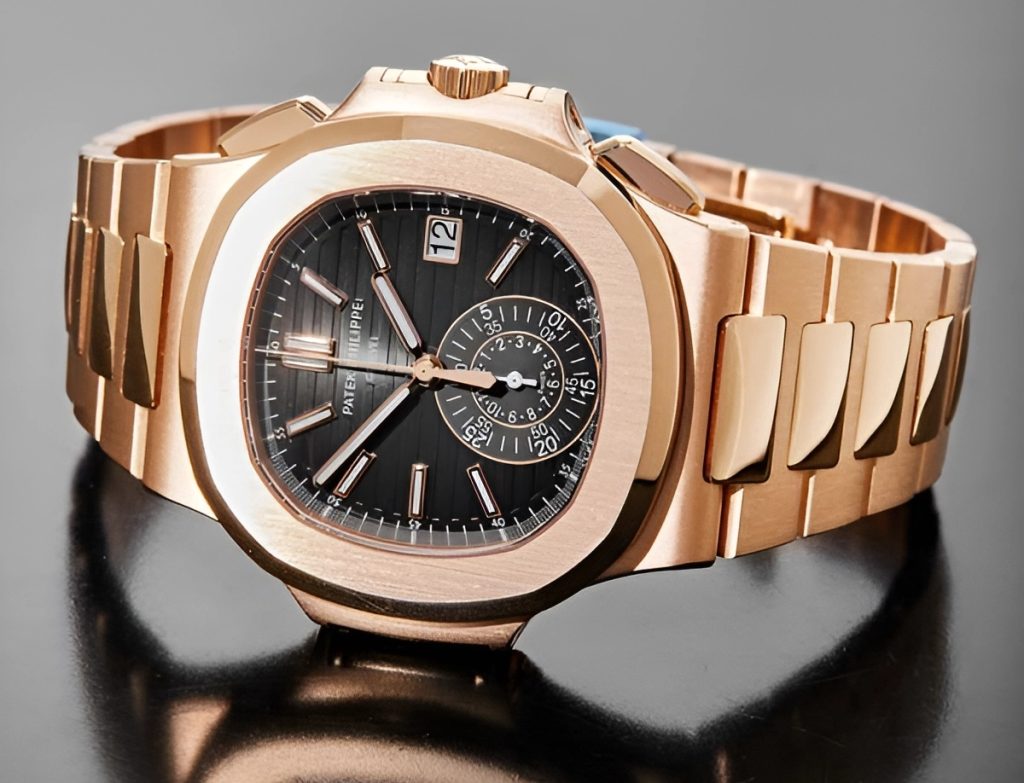
Buy a Rolex, Patek Philippe, Audemars Piguet, Cartier or any number of well made mechanical watches today and, if it is properly maintained, there is no reason it should not still be working generations from now.
That changes the relationship we have with it.
It might be the watch you bought when your business became successful. The watch you wore when you got married. The watch your father wore every day. The watch your grandfather bought when he was 30.
Eventually, what it is worth can become almost irrelevant.
At Bloombar, we have handled some extremely valuable watches over the years, but the watches people are most reluctant to part with are not always the most expensive ones. They are often the watches with a story attached to them.
You cannot manufacture that.
The appeal of independent watchmaking
This desire for something different may also help explain the growing interest in independent watchmakers.
Collectors are increasingly looking beyond the largest manufacturers towards smaller houses and individual watchmakers where annual production can number in the hundreds, or sometimes far fewer.
When you see the work of the best independent watchmakers up close, it is easy to understand why.
You can see the human involvement in the finished watch.
That is becoming increasingly rare.
Most industries have spent decades moving towards automation, standardisation and huge production numbers. Swiss watchmaking has obviously adopted modern manufacturing techniques as well, but it has managed to preserve something unusual. Small scale manufacturing where highly skilled people still make, assemble and finish objects by hand.
When almost anything can be mass produced perfectly, individuality starts to become a luxury in itself.
Maybe we don’t want another screen
None of this means technology is going away.
Smartwatches are incredibly useful. They can monitor your health, track exercise, show messages and even alert someone if you have an accident.
But do we really want every object in our lives to be smart?
Sometimes an object is more enjoyable because it knows absolutely nothing about us.
A mechanical watch does not measure your productivity. It does not congratulate you for standing up. It does not know where you have been. It is not collecting information about you or trying to optimise your day.
It simply tells the time.
And even then, not quite perfectly.
There is something rather nice about that.
The ultimate analogue luxury
Perhaps the mechanical watch will not survive the digital age despite being old technology.
Perhaps it will survive because it is old technology.
As our lives become faster, smarter, more connected and more disposable, an object made slowly, mechanically and with the intention of lasting for generations starts to feel increasingly special.
A fine Swiss watch represents almost everything modern consumer technology does not.
It is mechanical rather than digital. It can be repaired rather than replaced. It develops character rather than becoming obsolete. It can last for decades and still perform the same function it did on the day it was made.
Most importantly, it can have a life beyond its original owner.
Nobody is going to hand their old Apple Watch to their son or daughter and tell them to look after it so that one day they can pass it on to their own children.
A Rolex or a Patek Philippe?
That is a different story.
If you are looking to acquire something that can tell your story, get in touch and we’ll be more than pleased to assist.
Eddie Bloom
Founder
BLOOMBAR
Posted in Blog
30 September 2026